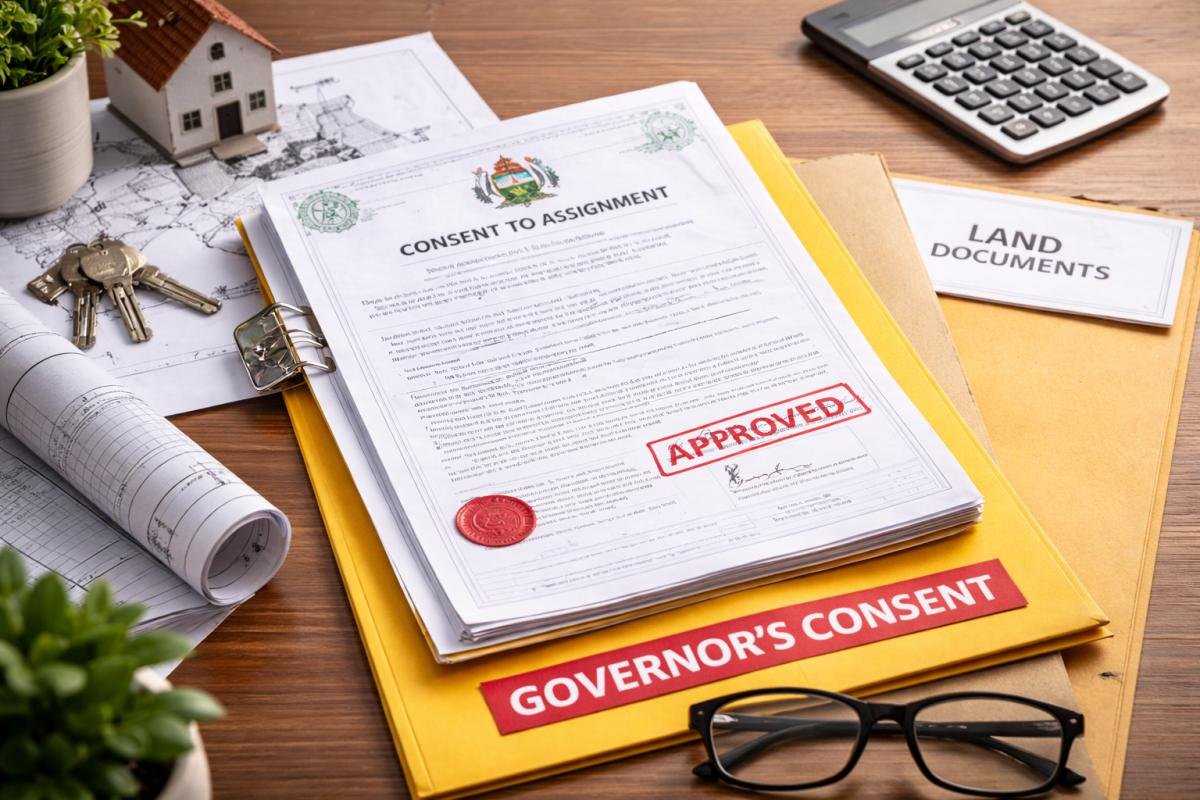
Governor’s Consent in Nigeria: What Every Property Buyer Must Know Before Paying
Governor’s Consent in Nigeria is an important part of certain property transactions, yet many buyers do not fully understand what it means, when it is required or why it matters.
Imagine finding a property in a good location, negotiating a reasonable price and receiving copies of the seller’s title documents. You see a Certificate of Occupancy (C of O), a survey plan and a deed of assignment. Everything appears convincing.
But there is one important question you should not overlook: Has the required Governor’s Consent been obtained for the transaction, and has the title been properly perfected?
Understanding this process can help you ask the right questions, identify documentation gaps and make more informed property investment decisions before committing your money.
In this guide, we explain what Governor’s Consent means, when it is required, how the process works and the important checks every property buyer should make.
1. What Is Governor’s Consent in Nigeria?
Governor’s Consent is the formal approval of the Governor of a state for certain transactions involving a statutory right of occupancy.
Under Section 22 of the Land Use Act, a holder of a statutory right of occupancy granted by the Governor is generally required to obtain the Governor’s consent before assigning, mortgaging, transferring possession of or subleasing the interest in the land.
In simple terms, when a property owner holding a statutory right of occupancy wants to transfer or otherwise deal with that interest in a transaction covered by the Act, the required consent must be obtained.
For example, where an individual holds a statutory right of occupancy and subsequently sells or transfers the property to another person, the transaction may require Governor’s Consent.
This approval forms an important part of the title perfection process.
However, it is important to understand that the exact legal requirements depend on the type of title, the nature of the transaction and the applicable laws and procedures.
2. Why Is Governor’s Consent Important?
Governor’s Consent is important because it addresses the legal requirement for approval of certain transactions involving statutory rights of occupancy.
Here are some reasons property buyers and investors should take it seriously:
A. It supports proper title perfection
A property transaction does not necessarily end when the purchase agreement is signed or payment is completed. The necessary documentation and registration steps must also be considered.
Where consent is required, obtaining it is an important part of perfecting the transaction.
B. It provides an official record of the transaction
The consent process forms part of the official land documentation and registration process. It helps create a record of the transaction in the relevant government land administration system.
C. It supports future transactions
A properly documented and perfected title can make future transactions, including resale, financing or other dealings with the property, easier to process.
D. It helps reduce documentation-related risks
Buyers who understand the consent requirement are better positioned to ask the right questions, identify missing documentation and seek professional advice before completing a transaction.
Remember, Governor’s Consent is not a guarantee that a property has no title defect. The root of title and the entire transaction must still be investigated.
3. When Is Governor’s Consent Required?
Section 22 of the Land Use Act addresses the alienation of statutory rights of occupancy.
The provision generally requires the Governor’s consent for transactions involving:
- Assignment: The transfer of a person’s interest in a property to another party.
- Mortgage: Using the property interest as security for a loan, subject to the specific statutory provisions and exceptions.
- Sublease: Granting another person a leasehold interest in the property.
- Other forms of alienation: Certain transactions involving the transfer or dealing with the statutory right of occupancy.
The Act also provides specific exceptions, so it is important not to assume that every transaction follows exactly the same process.
For customary rights of occupancy, Section 21 provides for the applicable consent or approval requirements, which may involve the relevant local government rather than the Governor in ordinary cases.
This is why the nature of the title must be established before deciding which approval is required.
4. C of O vs Governor’s Consent: What Is the Difference?
This is one of the most misunderstood areas of property documentation in Nigeria.
A Certificate of Occupancy and Governor’s Consent are not the same thing. They serve different purposes.
Certificate of Occupancy (C of O)
A C of O is a document issued by the appropriate government authority as evidence of a statutory right of occupancy over a parcel of land, subject to the applicable law and conditions.
It is commonly presented as evidence of the holder’s interest in the land.
Governor’s Consent
Governor’s Consent is the approval required for certain subsequent transactions involving a statutory right of occupancy, such as an assignment, mortgage or sublease.
For example, a property may originally have been granted a C of O to its first holder. If that holder subsequently transfers the interest to another person, the transaction may require Governor’s Consent.
The buyer should therefore establish not only what title document the seller holds, but also whether the seller’s interest was properly acquired and whether the relevant transaction and registration requirements have been fulfilled.
The important distinction: A C of O is evidence of a right of occupancy. Governor’s Consent is an approval connected to certain transactions involving that right.
Neither document should be treated as a substitute for proper title investigation.
5. How Do You Obtain Governor’s Consent in Lagos State?
The process of obtaining Governor’s Consent is handled through the relevant state land administration authorities. In Lagos State, land title matters are handled through the Lagos State Lands Bureau and the appropriate departments responsible for land services and registration.
Although the exact requirements may vary depending on the nature of the transaction and the title document, the general process may involve the following stages:
Step 1: Confirm the existing title
The applicant should establish the nature and status of the existing title. This may include a C of O, an earlier registered deed or another recognised title document.
Step 2: Prepare the transaction documents
The relevant deed of assignment, mortgage or sublease and supporting documents must be prepared and reviewed.
Step 3: Submit the application
The application is submitted through the appropriate government channel with the required supporting documents.
Step 4: Verification and assessment
The relevant authorities may examine the title documents, transaction details and other required information.
Step 5: Payment of assessed fees
Applicable statutory fees and charges are assessed according to the relevant state requirements and the details of the transaction.
Step 6: Consent and registration
Once the application satisfies the applicable requirements and approval is granted, the consent is signified in the appropriate manner and the relevant instrument proceeds through the required registration process.
Please note that this is a general explanation, not a complete Lagos State application checklist. Requirements, forms, charges and processing procedures can change. Applicants should confirm the current requirements directly with the Lagos State Lands Bureau or through its official channels before making payments.
6. Who Is Responsible for Obtaining Governor’s Consent?
This is an important question during property negotiations.
The responsibility for initiating and completing the consent and perfection process should be clearly addressed in the transaction documents.
In many transactions, the buyer and seller agree on who will handle the application and who will bear the associated expenses. The agreement may also specify whether the seller is expected to provide an existing perfected title or whether the buyer will undertake further perfection after purchase.
Do not leave this matter to assumptions.
Before making payment, ask:
- Is the seller providing an already perfected title?
- Is the transaction subject to obtaining Governor’s Consent?
- Who will process the application?
- Who will pay the applicable fees?
- What documents will be handed over after completion?
- What happens if the application encounters a title-related problem?
A clear written agreement can help prevent disagreements after payment has been made.
7. What Happens If a Property Transaction Is Not Properly Perfected?
Failing to obtain a required consent or complete the relevant registration steps can create legal and practical complications.
Depending on the transaction and applicable law, possible consequences may include:
Difficulty with future resale: A buyer may encounter challenges when trying to transfer the interest to another purchaser.
Financing complications: Financial institutions may require evidence of a properly documented and perfected interest before accepting a property as security.
Disputes over ownership and documentation: Incomplete or inconsistent documentation can create uncertainty and increase the risk of disputes.
Additional costs and delays: A buyer may have to undertake outstanding documentation and registration processes, which can involve further expenses and time.
Section 26 of the Land Use Act also addresses transactions and instruments that do not comply with the Act. The legal effect of a particular transaction should therefore be assessed by a qualified property lawyer rather than assumed.
The lesson is simple: do not treat documentation and title perfection as an afterthought.
8. Five Things to Verify Before Paying for a Property
Whether you are purchasing land, an apartment, a duplex or an investment property, these checks should form part of your due diligence.
1. Verify the root of title
Find out how the seller acquired the property and request the documents establishing the seller’s interest. Do not rely solely on a photocopy of a C of O or a verbal assurance.
2. Conduct an independent land registry search
A qualified professional should conduct the appropriate search at the relevant land registry to establish the status of the title and identify any registered interests, encumbrances or other issues that may affect the transaction.
3. Confirm the survey plan and property location
Ensure that the survey plan corresponds with the actual property being offered. A surveyor should verify the location, boundaries and relevant land information.
4. Establish whether consent and other approvals are outstanding
Ask whether the seller’s title has been perfected and whether any Governor’s Consent, registration or other approval is still required. Establish who will be responsible for completing the outstanding steps.
5. Engage a qualified property lawyer
Have a property lawyer review the title documents, search results, agreement and transaction structure before you make a major financial commitment.
These checks are not unnecessary formalities. They are part of protecting your investment.
9. Frequently Asked Questions About Governor’s Consent in Nigeria
Is Governor’s Consent the same as a Certificate of Occupancy?
No. A C of O is evidence of a statutory right of occupancy, while Governor’s Consent is approval required for certain subsequent transactions involving that right.
Can I buy a property without Governor’s Consent?
The answer depends on the nature of the title and the transaction. Where the law requires consent for the transaction, the applicable requirement must be addressed. A buyer should obtain legal advice before proceeding.
Does every property in Nigeria require Governor’s Consent?
No. The requirement depends on the nature of the title, the transaction and the applicable legal framework. For example, Section 21 of the Land Use Act addresses customary rights of occupancy and provides a different approval framework from Section 22, which deals with statutory rights of occupancy.
Does having Governor’s Consent mean the property is completely safe?
No. Consent does not automatically cure a defective root of title, resolve boundary disputes, remove every encumbrance or guarantee that the property is free from government acquisition or other restrictions. Independent due diligence remains essential.
Can Governor’s Consent be obtained after a property has been purchased?
In some transactions, the consent and related perfection process may be completed after the parties have executed the relevant documents. However, the statutory requirement, timing, legal effect and risks should be reviewed by a qualified lawyer before the transaction is completed.
How much does Governor’s Consent cost in Lagos State?
There is no single amount that should be assumed for every transaction. Applicable charges depend on the relevant state requirements and transaction details. Confirm the current assessment with the appropriate government authority before making payment.
Final Thoughts: Do Not Pay First and Ask Questions Later
Property investment should be approached with information, proper investigation and professional guidance.
A document may look convincing, a seller may sound genuine and a property may be located in an attractive neighbourhood. But none of these should replace a proper examination of the title and the transaction.
Understanding Governor’s Consent in Nigeria is one part of becoming a more informed property investor. Knowing what to verify, which questions to ask and when to involve the right professionals can make a significant difference.
At TeefranRealty, we believe that a good property decision goes beyond finding an attractive offer. It requires understanding the documentation, assessing the risks and making informed choices.
Before you commit your money to a property, let us help you approach the process with clarity.
TeefranRealty – We bring your dream home to reality.
For property enquiries, investment guidance and inspection arrangements:
Call: 08066414992
Website: www.teefranrealty.com
Disclaimer: This article is for general educational purposes and is not a substitute for legal advice. Land administration procedures and requirements may differ across states and may change. Consult a qualified property lawyer and the relevant government authority before completing a transaction.